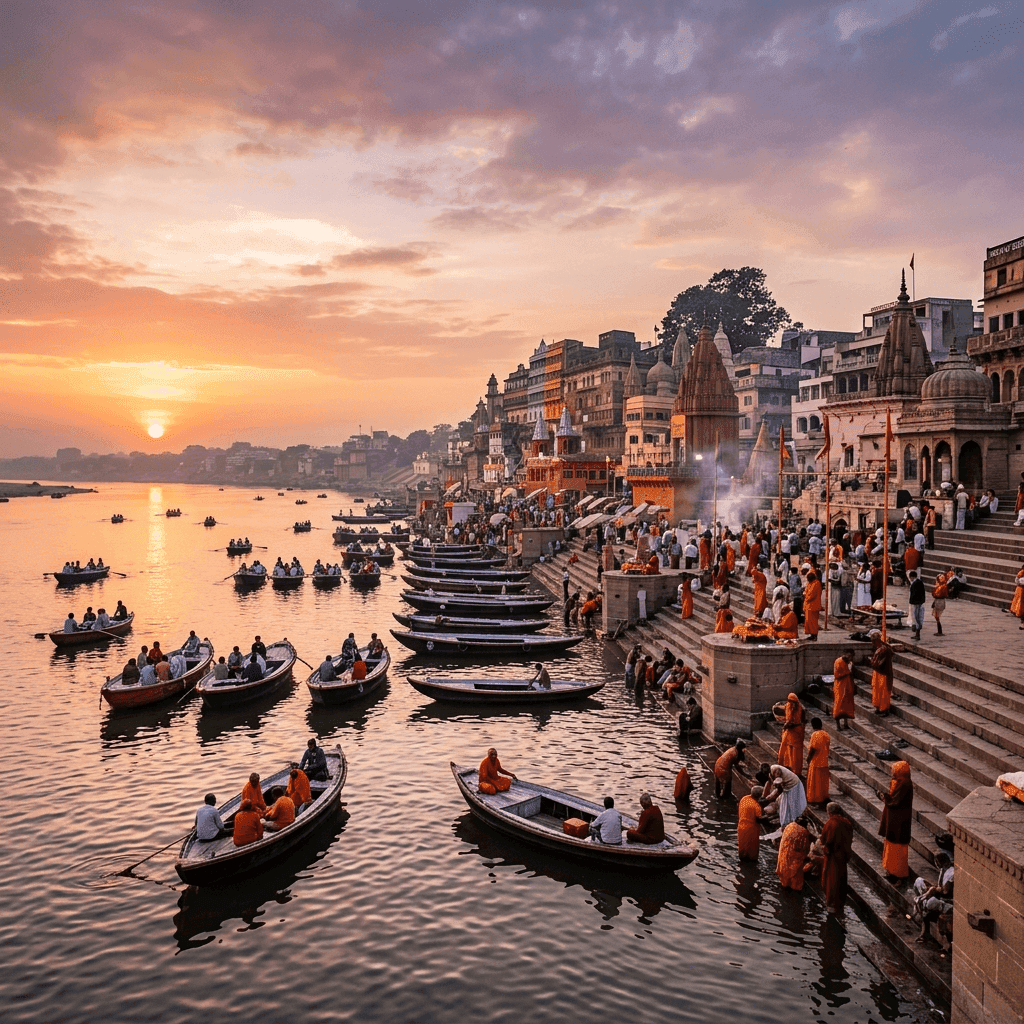
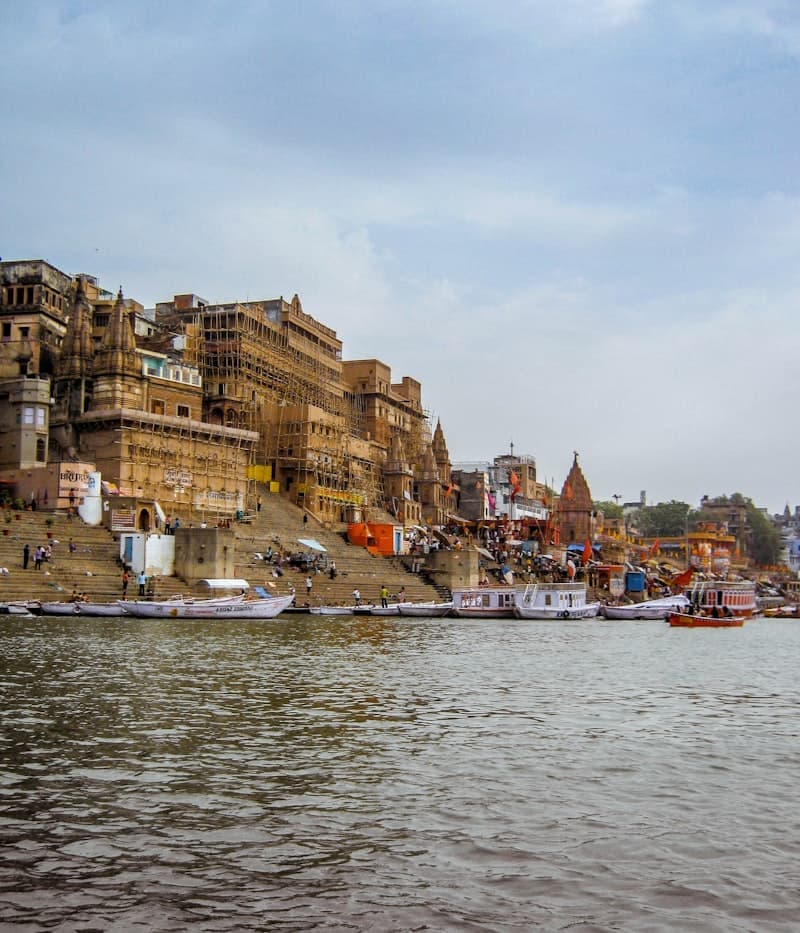
Discover the most spiritual and serene ghats along the Ganges for an unforgettable evening experience and beautiful Ganga Aarti visual details.
The Spiritual Heart of Varanasi
Varanasi, one of the oldest continuously inhabited cities in the world, is defined by its ghats—the stone steps leading down to the sacred river Ganges. Each ghat has its own unique history, spiritual significance, and cultural atmosphere.
1. Dashashwamedh Ghat
Dashashwamedh Ghat is the main and most spectacular ghat in Varanasi. It is famous for hosting the daily Ganga Aarti, a grand ritual of worship using large brass lamps, oil, and incense, performed by young priests. Legend has it that Lord Brahma created it to welcome Lord Shiva.
2. Assi Ghat
Located at the confluence of the Ganges and the Assi rivers, Assi Ghat is a hub for pilgrims, researchers, and tourists. It is famous for the early morning ritual of Subah-e-Banaras, which features morning prayers, music, and yoga sessions by the riverside.
3. Manikarnika Ghat
Manikarnika is the primary cremation ghat in Varanasi. While it can be intense for visitors, it represents the ultimate truth of life and death in Hindu philosophy. Devotees believe that cremation here grants moksha (salvation) to the soul.
4. Harishchandra Ghat
Another holy cremation spot, named after the legendary King Harishchandra, who worked at the cremation ground to uphold truth and righteousness. It is a place of deep contemplation.
5. Panchganga Ghat
This peaceful ghat is believed to be the meeting point of five holy rivers: the Ganges, Yamuna, Saraswati, Kirana, and Dhutapapa. It features the beautiful Alamgir Mosque built on top of ancient temples, presenting a unique historical perspective.